
+918048053298

Currently it only shows your basic business info. Start adding relevant business details such as description, images and products or services to gain your customers attention by using Boost 360 android app / iOS App / web portal.
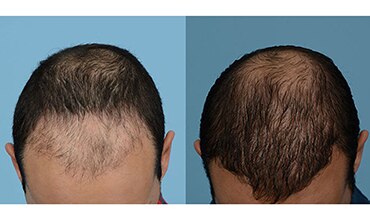
HAIRLINE TRANSPLANTS FORM MEN & WOMEN We perform state-of-the-art hairline transplants for men and women. To achieve the most realistic results, our expert surgeon will explain a hairline plan design specifically for each individual. The newly restored hairline will look absolutely natural because in-fact, it is not a line. Our ultimate goal of a hairline transplant is undetectable. HAIRLINE DEFINES NATURAL & YOUTHFUL LOOK OF A HAIR TRANSPLANT Newly designed hairline must have two superior features. First, it should be natural looking. Second, it should be individualized. Why these aspects are so important because frontal hairline, more than any area of our scalp, defines the end result of the hairline transplant. The hairline will be observed daily by the individual and rest of the world. The result of hairline restoration re-frames person’s facial and overall look. Natural appearing hairline with proper density will be responsible for optimum aesthetic results of any hair transplant procedure. To achieve fuller, thicker and youthful hair transplant outcome, it is significant to know that a scientific and artistic approach is required to design a very realistic looking hairline. This valuable aspect indicates that hair surgeon must make exact slits with the proper angle for each graft that ensures the placement of hairs and this will allow the hair to grow in the right direction. Actually, the hair line is a signature of your surgeon and you will wear it the whole life. WHAT IS A HAIRLINE? The area at the top of our forehead from where our hair on head starts growing or the region where the forehead merges with the scalp hair called “Hairline”. Because of the popularity of modern hair restoration and new development in the quality of techniques, today many individuals consider hair transplants for hairline restoration. It is absolutely possible to create a natural hairline through hair transplant surgery. However, they should understand that it is normal to change the position of the hairline as we grow older. Natural Shapes of Hairlines Human forehead hairline has different types and shapes. Each shape is unique and requires special attention, vision and personifies aesthetic in order to restore. These shapes occur due to genetic, hair loss or ethnicity. 1. Straight hairline 2. Oval hairline 3. V-shaped hairline 4. Receding and mature hairline 5. High and low hairline Straight Hairline: This is a normal frontal hairline considered in men. Straight hairline provides a balanced look of forehead and face. Mature and Receding Hairline: Due to Male Pattern Baldness hairline recedes from the left and right temporal zones. This type of hairline is common for older males. However, sometime this shape can appear in females because of hair loss. Some individuals don’t like this matured shaped hairline and consider transplantation as an option to make their hairline look younger. Oval Hairline: The round or oval hairline is when forehead looks oval-shaped due to hair growth on top of the forehead. This type of hairline is very common in females. Sometimes individual may feel thinning and seek hair transplant to make thicker hairline. V-Shaped Hairline: This is a typical frontal hairline. Hair appears in V shape and hair grows in different directions. This may appear in front of the forehead or may appear on the back of frontal hairline. Wherever it occurs it’s clearly noticeable. Individuals may consider hair transplant to enhance forward this type of hairline. High and Low Hairlines: Some individuals are born with unnatural low or high hairlines. Sometimes individual may have this shape due to an accident or injury. These people may not be happy with the look of the high hairline and if this type of hairline bothers the individuals they can seek hair transplantation as an ideal option to lower hairline. THE ART AND SCIENCE OF A HAIRLINE DESIGN I believe that hairline is the most visible part of the head and good hairline gives you a more youthful appearance. Therefore, the newly created hairline should be natural-looking, be aesthetically placed on the right location and be appropriate to a person’s facial features and age. A well experienced, artistic and skilful hand is a key to design a natural hairline. The experienced and skilled hair transplant specialist knows how this designed hairline will age as the person ages and patient will be able to appreciate a natural look in person, photograph and in a mirror. The results then will meet their facial features, sex, age, ethnic character and head shape. Here are some key concepts to creating a natural-looking hairline. 1. Regular irregularity 2. Undulation pattern 3. Variable thickness 4. Adequate direction 5. Customizing ethnicity and gender Understanding the above concept a surgeon can design a very natural hairline with proper density in every individual. In order to achieve the ideal outcome of the hairline restoration, the shape and design on the top of the forehead are important as well. Every person has unique forehead shape that requires considerations. Here are some important characteristics that should be considered by a hair restoration surgeon when designing a hairline. 1. Age 2. Forehead shape and facial features. 3. Recipient hair loss area. 4. Old hairline before receding. 5. Donor area flexibility and density. 6. Individual’s expectations and needs. AESTHETICS OF HAIRLINE AND GRAFTS PLACEMENT Patient’s age, degree of hair loss, location and shape of hairline, progression of hair loss, family history, graft type and density are very important to address when lowering or reshaping hairline. The height of hairline can be determined in several ways. The central hairline can be placed 6.5 to 8 centimeters above the brow, we can use four fingers above the top of eyebrows to determine hairline. The fundamental aesthetic is forehead constitutes half the distance between eyebrows and the chin. However, there is no definite figure but person’s age, gender, ethnicity and needs are more important. To achieve most natural look and thickness, frontal full area should be divided into two zones. The anterior or transition zone should be irregular and soft. The posterior or defined zone should be more thick and definite. The Transition Zone: The frontal 0.5 to 1.5 cm of the hairline is a transition zone. If the patient has a greater degree of hair loss then the transition zone can be wider. This zone should not be a straight line rather it should be irregular or zigzag. This zone contains elongated triangles of single hairs with low density (10 to 18 hairs / sq.cm). Concentrating of placement single follicles and creating no defined line we can gain a very natural result of the hairline. The Defined Zone: The portion behind the transition zone is called a defined zone and consists of around 2 to 3 cm area. The defined zone requires high density and high defined hairline for a natural result. In this zone, single follicles are placed with higher density (15 to 35 hairs /sq.cm). Implantation of single, double and triple follicles unit can accomplish both goals of density as well as natural looking hairline. THE TECHNIQUE The hairline lowering procedure starts with the administration of local anaesthetic in the donor region and harvesting of hair follicles from the safe zone. We use the FUE Hair Transplant technique hairline restoration. The hairline restoration is 3 steps procedure. 1: Donor Harvesting: The grafts are harvested form a safe zone in the back of the head. There are two common ways of removing follicles, Strip harvesting and follicular unit harvesting. Careful individual harvesting of donor hair with lowest transaction while maximizing harvesting yield is equally important to avoid bad hair transplant results. 2: Creating the Recipient Sites: Perfect angle and direction, perfect pattern and perfect graft-to-site fit are the keys to make your hair transplantation results as natural as possible. The slits should be created with proper angle and depth to assure blood supply of inserted follicles. The projected position of angles will be responsible for the right direction of inserted grafts to grow naturally. Frontal hairline angle variation is 20 to 35 degrees in different regions. Ending of defined zone or back of this portion may require between 30 to 40 degrees of angle variation. However, temples angle changes 10 to 15 degrees. 3: Grafts Insertion: This is a final step of the hair restoration process that requires aesthetically trained eye and surgically skilled hand. Placement of grafts following the directions of created sites under the supervision of an expert hair transplant surgeon provides an undetectable natural look. Single follicular units are placed in frontal hairline know as “transition zone” and double follicles are placed behind the frontal hairline for slightly more density in the “defined zone” while units of three follicles are placed at the anterior top and back to provide maximum density. WHAT ARE THE RISKS INVOLVED IN HAIRLINE RESTORATION PROCEDURE? The common risks of hairline restoration are swelling for a few days and bad hairline brings unnatural appearance and unpleasant shape. However, if it is done properly by an expert hand, people cannot notice that a hair transplant has been done; on the contrary, if the hair transplant is easily detectable it means it is poor hair transplantation. The basic goal of hairline restoration is to provide the patient with a fully natural appearance with a reasonable density that will express a person’s unique individuality.


