

+918048053298

Currently it only shows your basic business info. Start adding relevant business details such as description, images and products or services to gain your customers attention by using Boost 360 android app / iOS App / web portal.
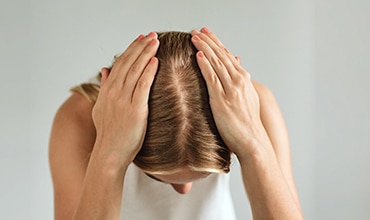
About Hair Loss In Women Noticing strands of hair in your comb often these days? Every day we lose around 50-100 strands of hair approximately, but then the same is replaced by new ones, as this is a natural hair growth cycle. Your hair goes through three distinct phases of growth- anagen, catagen and telogen. These stages occur simultaneously and it is the characteristic of each phase that determines the length of the hair. Hair fall is a common concern witnessed by a lot of women where they lose more than a normal number of hair strands every day. A reduction in hair density and more scalp visibility like- widening of the hair partition, are also signs of Hair Thinning. Women start noticing hair thinning between ages 25 to 30. Both hairs falls and thinning can be attributed to reasons like lack of nutrients, hereditary factors, ageing, illness, stress and hormonal imbalances. The levels of endocrine hormones, particularly androgens and hormonal changes caused by menopause also cause hair fall and thinning in women. FEMALE PATTERN BALDNESS/ANDROGENIC ALOPECIA Losing/shedding up to 100 strands a day is normal for women and there is nothing to worry about; because those fallen hair are generally replaced by new hair and the hair growth cycle tends to continue this way. But you need to check that your hair fall problem is limited to this extent only or it is something beyond that! Generally, people think that baldness occurs more in case of men; but the considerable percentage of women is also among the hair loss/baldness sufferers. Approximately 40% of women are suffering from hair loss by the time they are age 40. It is considered that women hair loss or baldness can be serious life-altering which can no longer be overlooked. It can make a destructive impact on emotional well-being and self-confidence of women. WHAT CAUSES FEMALE PATTERN BALDNESS? According to the normal growth cycle, each hair grows for 2 to 6 years, then rests and finally falls out. The new hair soon begins growing in that place and if new hairline does not grow as per the requirements, then the female pattern baldness occurs. Women are less prone to complete baldness; but as a result of hair thinning, the density/volume of their hair gets extremely affected. There are multiple reasons available that can contribute to female hair loss or baldness: • Aging • Changes in the levels of hormones due to reaching menopause, pregnancy • Genetics/Previous baldness history in the family • Certain skin diseases, autoimmune diseases, a major illness, surgery • Deficiency of Iron, vitamin B (biotin) or other vitamins • Hair shaft abnormalities that are present since birth • Excessive usage of hair straightening products or use of some cosmetic hair products enriched with high chemicals, such as hair gels, sprays etc. • Conditions like patchy hair loss (alopecia areata) • Medications in case of Cancer such as chemotherapy and beta-blockers HOW IT CAN BE DIAGNOSED & TREATED? If you are losing more hair than usual and they are not growing back, then it is definitely a matter of concern. You can visit an experienced doctor or dermatologist and discuss your hair thinning/hair loss problem. The doctor will examine your pattern of hair loss and he may perform a blood test to identify the causes that are affecting your hair growth. You can prevent female pattern baldness with early diagnosis. The right medications will potentially minimize/stop future hair loss and the appropriate hair growth treatment plan will help you to re-grow your lost hair. Alopecia Areata Alopecia areata is a common autoimmune disorder that results in unpredictable hair loss from the head, beard, or any part of the body. It affects regardless of age and gender, though most cases occur before the age of 30. It is genetic and passes down in the family. One in five people suddenly over a course of just a few days start to lose tremendous amounts of hair. People with alopecia areata who have only a few patches of hair loss soon recover their hair without treatment. The condition occurs when white blood cells attack the hair follicles, causing them to shrink which dramatically slows down hair production. It is not known why hair follicles fall in this way, but it progresses rapidly and can cause large patches, thus causing social awkwardness. It is often conjectured that stress could be a probable cause of Alopecia Areata but there aren't many researches to validate the claim. Further, it can develop into complete loss of hair on the scalp termed alopecia totalis or in extreme cases the entire body called alopecia Universalis. Corticosteroids, powerful anti-inflammatory drugs that can suppress the immune system can stop white blood cells from attacking the hair follicles. Traction Alopecia Traction Alopecia is a form of acquired hair loss that results from prolonged or repetitive tension to the scalp hair. It was first described in 1907 in patients hailing from Greenland who had been diagnosed with hair loss after wearing hair in tight ponytails for longer periods. This issue can develop due to: 1. Regularly wearing your hair in tight ponytails, buns, braids, dreadlocks. 2. Using relaxers and rollers on hair. 3. Having longer beard and hair and twisting and braiding it, increases its weight and causes submandibular traction alopecia. The likelihood of traction alopecia increases with age and also from what age you started to put pressure on your hair. There are different phases in this type of hair fall and only getting a consultancy from the best hair transplant clinic in India will provide you with the best solution. The different stages in Traction Alopecia: A. Early stages: There is thinning of hair and you start to notice hair growth cycle change slowly but gradually and the amount of Telogen (resting) hair increase. B. Later stages: Sebaceous glands and terminable hair follicles reduce and are replaced by fibrous tracts (scars). Inflammation is mild to absent. Anagen Effluvium Anagen Effluvium refers to hair shedding that commences during the growth stage of the hair growth cycle. Anagen effluvium has shown to cause diffuse non-scarring alopecia. This is in stark contrast to telogen effluvium where hair shedding onsets during the resting phase of the hair growth cycle. It is generally associated to be caused by infections, toxins, autoimmune diseases, drugs, or radiations. Patients who are undergoing chemotherapy also have hair loss due to anagen effluvium. Usually, in anagen effluvium, the end of the hair that is scraped from the scalp is tapered, irregular, or broken off. Anagen hairs have long roots covered with the inner and outer root sheaths and they get pigmented. Telogen Effluvium Telogen effluvium or hair shedding which arises during the telogen or resting phase of hair growth cycle. It is in complete opposition to anagen effluvium where hair shedding happens during the growth stages. It is usually caused due to hormonal imbalance but consuming medicines that misbalance hormones can also cause hair loss. Usually, hair starts to recover on its own because this type of hair loss is temporary. But if there is a pattern found in hair loss, then the hair fall will increase and you will be required to consult a Hair specialist. Cicatricial Alopecia Cicatricial or scarring alopecia comprises of diverse groups of scalp disorders that result in permanent hair loss. This destructive process can occur as a primary or secondary cicatricial alopecia. Primary cicatricial alopecia refers to a group of idiopathic inflammatory processes that cause follicle inflammation destroying the hair follicle. Secondary cicatricial alopecia can be caused by almost any cutaneous inflammatory process of the scalp skin or by physical trauma, which injures the skin and skin appendages. Regardless of Cicatricial alopecia being primary or secondary, it causes replacement of hair follicle with fibrous tissue, thus hair can't grow here. But Cicatricial Alopecia is just about 3% of the overall cases of hair fall complaints. Bald patches, in this case, are due to inflammation thus anti-inflammatory medications are suggested. Minoxidil 2% solution has shown to be effective, but hair transplant is the best treatment. Folliculitis Folliculitis is the name given to a group of skin conditions in which there are inflamed hair follicles. There is always a red spot with a pustule on the skin. Folliculitis may be superficial or deep. It can affect any place where there is a presence of hair, including chest, buttocks, back, arms, and legs. Acne and its variants are also types of folliculitis. Folliculitis can be due to infection, occlusion (blockage), irritation, and various skin diseases. Folliculitis can be due to bacteria, yeasts, fungi, viral infections, parasitic infections, and many others. Taking medications to curb down the folliculitis and suppress the cause of irritation can lead to a stoppage of hair loss. Eosinophils are present whenever there is an inflammation in the body thus treatment may also include immunosuppressants. Hair Loss by Folliculitis isn't a lot but it can lead to major hair loss if you allow it to stay and ignore it. Dandruff, Dry & Flaky Scalp Itchiness due to dandruff often causes irritability and embarrassment. Dandruff does make your scalp itchy and flaky. That white flake which you scratch off from the scalp is nothing but itchy dead skin. Males are more prone to dandruff concerns compared to females. It can be observed with the onset of adolescence which then continues till adulthood. You may try to get rid of it by maintaining a good hair wash routine, but that is not a sustainable solution. The scalp skin constantly renews itself. That is when the old skin drops off and a new one replaces it. This cycle is not visible when it is in the initial phase. But when the process accelerates, many more old skin cells shed in the form of visible clumps or flakes. The moment you brush your hair or rub through it, you will notice these flakes fallen on the shoulders or against any dark-coloured clothing. In terms of severity, itching and flaking are equally alarming. The common form of dandruff affects the entire scalp, but not the skin over the face or neck. Severe dandruff concern means quick shedding of old skin, which can lead to uncontrollable itchiness. Apart from drying of the scalp skin, there are many other reasons for dandruff. If your scalp skin is sensitive to hair products, it can also lead to dandruff. Also, environmental factors such as heat and humidity can aggravate dandruff. The concern can be observed either throughout the year or can vary as per season. Dandruff, if not treated at the right time, can cause hair loss and scalp inflammation. If your skin is suffering from acne or oily skin, the condition can worsen because of the flakes.


